

STEM learning in preschool does not begin with computers, robotics or formal lessons. It begins with play, movement and curiosity, and after 40 years in education, I believe that is still where children's most meaningful STEM learning happens. Here is what I have learnt, and why it shapes everything we do at Little School.
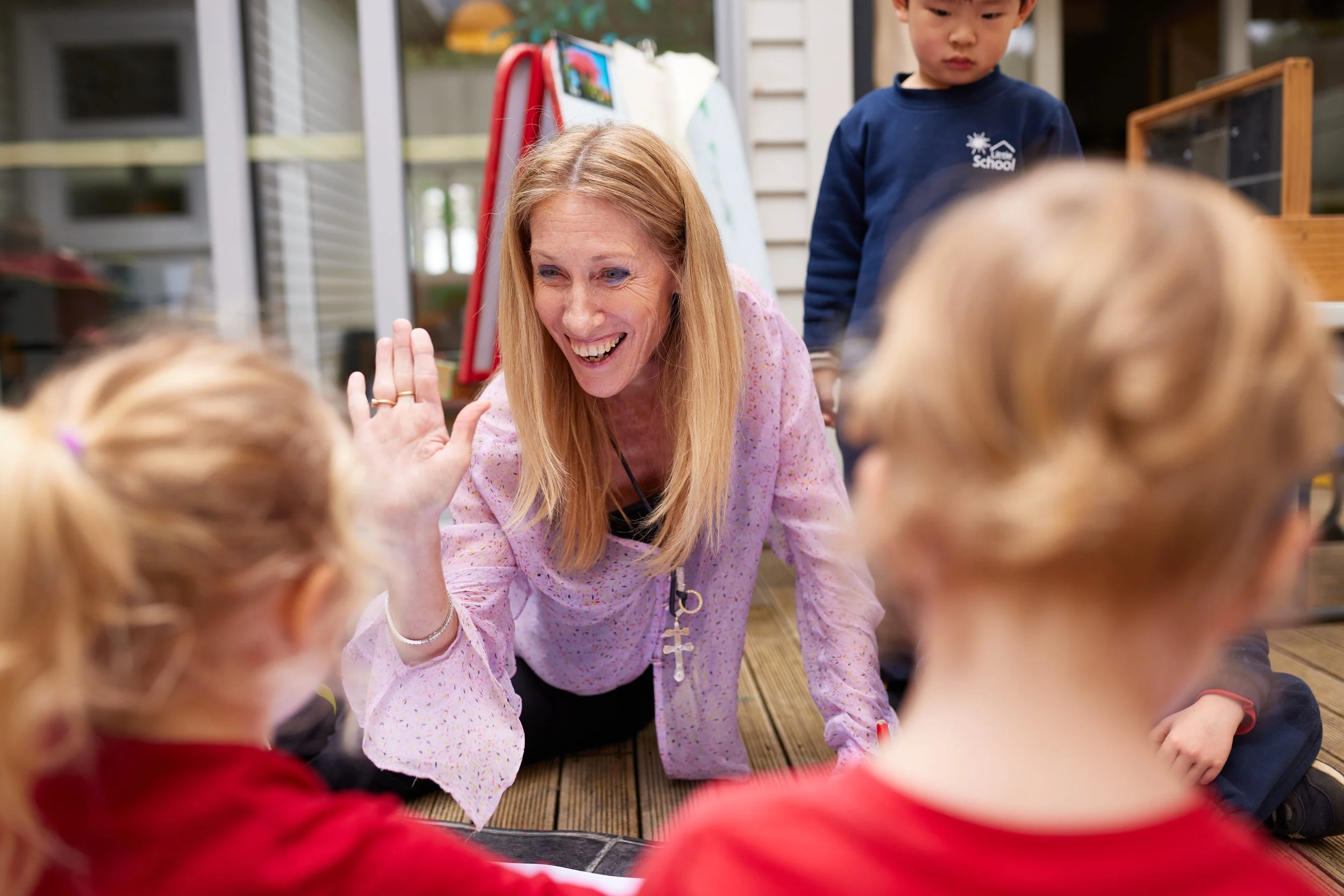
Celebrating STEM Week and 25 Years of Little School
As Little School celebrates its 25th anniversary, I find myself reflecting on the incredible journey we have taken and the many thousands of learning experiences that have shaped our understanding of children and how they learn. Having spent over 40 years working in education, across both the primary and early childhood sectors, there is one belief that has only become stronger with time: if we genuinely want children to succeed in learning and in life, we must first understand how they develop.
We need to recognise that learning does not begin with a pencil, a worksheet or a formal lesson. It begins with the experiences children have from the moment they enter the world, through their senses, their movements, their relationships and their natural desire to explore and understand everything around them.
With National STEM Day on 8 November and the wider celebration of STEM Week, I thought this was a wonderful opportunity to reflect on why STEM learning in preschool (science, technology, engineering and mathematics) is so important, and why we need to rethink some of the ways we introduce these concepts to young children.
STEM has become an increasingly important part of education, but in my experience, many people still associate it with computers, robotics, complicated experiments and subjects that are introduced when children begin formal schooling. The reality is that children are engaging in the foundations of STEM learning long before they can read, write or even understand what the letters STEM stand for.
In fact, some of the most meaningful STEM learning I have witnessed throughout my career has happened in sandpits, mud kitchens, outdoor playgrounds and construction areas, where children are completely immersed in what they are doing. At Little School, this understanding has been fundamental to our educational philosophy for the past 25 years. We believe that children are capable, curious and creative learners who need opportunities to explore their own ideas, make discoveries, solve problems and, most importantly, experience the joy of learning.
STEM Learning in Preschool Begins Long Before Formal Schooling
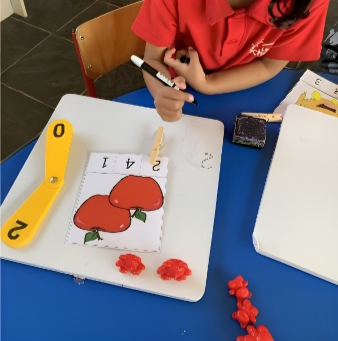
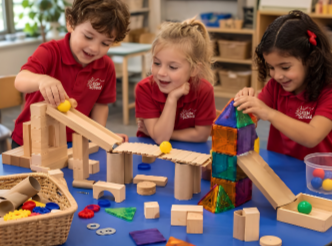
One of the things I have learnt from working with young children for so many years is that we often underestimate the complexity of what is happening when children play. To an adult, a child building a tower with wooden blocks may appear to be simply enjoying themselves, but when we look more closely, there is an enormous amount of learning taking place. The child is experimenting with balance, weight, size, shape and gravity. They are developing hand-eye coordination, spatial awareness and the ability to plan what they want to achieve. When the tower falls over, they are faced with a problem that requires them to stop, think, reconsider their approach and try again. This is engineering and scientific investigation in its earliest form, and it is happening naturally through play.
The same can be said for children experimenting with water, exploring which containers hold the most, discovering why some objects float while others sink, or constructing a bridge using planks and wooden blocks. These experiences involve mathematical thinking, prediction, measurement, experimentation and the development of logical reasoning. What I find particularly valuable is that children are not learning these concepts because an adult has told them they must. They are learning because they are curious, because they want to know what happens next and because they are personally invested in finding a solution.
Over the years, I have become increasingly concerned about the pressure to introduce formal academic learning at younger and younger ages. While literacy and numeracy are undoubtedly important, we must remember that children need strong developmental foundations to support more complex learning. When we replace meaningful play with activities that require children to sit for extended periods, follow instructions and produce predetermined outcomes, we may unintentionally reduce the very opportunities that help them develop curiosity, independence, perseverance and the ability to think for themselves.
This is one of the reasons why Little School has remained committed to creating environments that encourage investigation, exploration and learning through play. We have always believed that children should be active participants in their education rather than simply receivers of information, and that the role of the teacher is to recognise the learning taking place, extend children's thinking and provide opportunities that challenge them in meaningful and developmentally appropriate ways.
A Moving Child Is a Learning Child
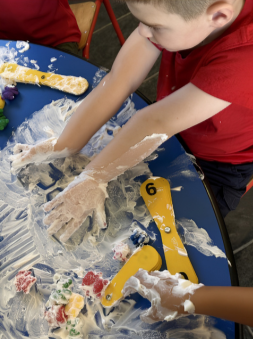
Throughout my career, one of the areas that has fascinated me most has been the relationship between children's physical development, their sensory systems and their ability to learn. We often think of movement as something children do to develop their muscles, improve their fitness or use up excess energy, but movement has a much greater significance in early childhood development. The brain and body are constantly working together as children learn to coordinate their movements, interpret information from their senses and make sense of the world around them.
The first six years of life are especially important because this is a period of rapid brain development. During these early years, children are forming and strengthening connections between nerve cells as they experience the world through movement, play, communication and relationships. The opportunities we provide for children to crawl, climb, balance, manipulate objects, experiment with materials and explore different environments all contribute to the development of skills that support their learning and independence.
I have always been a strong advocate for the philosophy that a moving child is a learning child, and I believe this is particularly relevant when we consider STEM learning in preschool. Children need opportunities to use their bodies as well as their minds when they investigate and solve problems. Consider the number of processes involved when a child constructs a marble run. They must use their hands and eyes together, understand where objects are positioned in space, predict how the marble will move and make adjustments when the outcome is not what they expected. They may need to work with another child, communicate their ideas, manage frustration and persevere through several unsuccessful attempts before they achieve what they set out to do.
These experiences bring together sensory-motor development, physical coordination, cognitive skills and emotional learning in ways that are difficult to replicate through a worksheet or a screen. At Little School, we have long recognised the importance of providing children with rich physical and sensory experiences, both indoors and outdoors, because we understand that their development is holistic. The body, brain, emotions and senses do not develop in isolation from one another. They are interconnected, and our educational environments need to reflect this.
Understanding Synaptic Pruning and the Developing Brain
As we celebrate STEM Week, I also want to bring attention to an aspect of brain development that I believe is important for parents and educators to understand. It is a process called synaptic pruning, which is part of the way the brain develops and becomes more efficient over time.
From infancy, children's brains form an extraordinary number of connections between nerve cells. These connections, known as synapses, allow information to be communicated throughout the brain. As children grow and develop, the brain gradually refines these networks, strengthening some connections through experience and reducing others as part of normal development. This process of synaptic pruning is one of the ways the brain becomes increasingly organised and efficient, and it continues through childhood and adolescence.
What does this mean for us as educators and parents? It reinforces the importance of providing children with varied, meaningful experiences that encourage them to practise skills, explore new ideas and make connections between what they already know and what they are discovering. We cannot control synaptic pruning through a particular activity, nor can we assume that repeating an exercise will automatically improve a child's academic ability. However, we do know that experience, practice and responsive interactions are important aspects of children's learning and brain development.
A simple example is a child learning how to complete a puzzle. Initially, they may struggle to recognise how the pieces fit together, becoming frustrated or relying on an adult for assistance. With time, encouragement and repeated opportunities, they begin to recognise shapes, remember strategies and develop greater confidence in their ability to solve the problem independently. Similarly, when children build structures, experiment with patterns or investigate cause and effect, they are practising skills that involve attention, memory, planning and logical reasoning.
After 40 years in education, I believe we sometimes make learning far more complicated than it needs to be. Children do not always require expensive equipment, specialised programmes or sophisticated technology to develop important thinking skills. Often, what they need most is time, appropriate resources, supportive adults and the freedom to explore their ideas without being rushed towards a particular outcome.
Neurodiversity: Recognising That Children Learn in Different Ways
One of the greatest responsibilities we have as educators is to recognise that children do not all develop, process information or demonstrate their abilities in the same way. This is particularly important when we consider neurodiversity and how we create inclusive learning environments that allow every child to participate and experience success.
During my years working with children, I have observed many situations where a child's capabilities become much more apparent when the learning experience changes. A child who finds it difficult to sit and listen to lengthy instructions may demonstrate remarkable concentration when given the opportunity to construct something using blocks or other materials. Another child who struggles with writing may have an excellent understanding of patterns, shapes and spatial relationships, while a child who needs frequent movement may be completely engaged when investigating how objects roll, balance or move.
These observations have reinforced my belief that we need to be careful about how quickly we judge children's abilities based on their performance in traditional learning situations. Children may experience differences in attention, language, sensory processing, motor coordination and communication, and these differences can influence how they engage with particular activities. They do not, however, tell us everything about a child's intelligence, curiosity or potential.
This is where STEM learning in preschool can offer such valuable opportunities for inclusion. When science, engineering and mathematics are introduced through visual, tactile and practical experiences, children have more ways to explore ideas and demonstrate their understanding without relying entirely on reading, writing or lengthy verbal explanations. For some children, this can make learning more accessible, while for others it provides opportunities to extend particular strengths and interests.
At Little School, our philosophy has always been centred on understanding the individual child. We recognise the importance of observing children carefully, identifying their interests and developmental needs, and adapting the environment and our teaching strategies to support them. Rather than expecting every child to learn in exactly the same way, we need to provide a range of opportunities that respect different ways of thinking, communicating and engaging.
I have often reflected on how differently a child's educational journey might unfold if, instead of immediately focusing on what they find difficult, we began by discovering what they can do, what captures their interest and what helps them feel confident and capable. This does not mean ignoring areas where a child may need additional support. It means recognising that every child has strengths that can provide a starting point for meaningful learning.
Hands-On STEM Activities for Preschoolers: Developing Logical Thinking
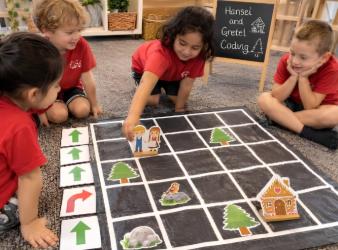
An exciting aspect of STEM learning in preschool is that children can begin developing the foundations of coding, mathematical reasoning and complex problem-solving without needing to use computers or complete text-heavy activities. In fact, for young children, hands-on experiences are often a much more meaningful way to introduce these concepts because they can physically explore relationships, experiment with ideas and see the results of their decisions.
One wonderful way to introduce early coding is through storytelling. Imagine a group of children who have been listening to the story of Hansel and Gretel and are now challenged to help the characters find their way through the forest to the house. Using a large tarpaulin laid out on the classroom floor, with white tape creating a grid, children can work together to plan a pathway. Picture cards of trees, rocks and the house create obstacles and destinations, while simple directional arrows allow the children to sequence their movements.
What I particularly enjoy about this type of experience is the way it connects familiar stories with mathematical thinking, spatial awareness and problem-solving. Children need to decide how many spaces their characters should move, which direction they should travel and whether their planned route will reach the destination. When their instructions do not work, they have the opportunity to reconsider, make changes and try again. These are the foundations of coding, but they are also developing language, collaboration, perseverance and an understanding of cause and effect.
For children who find reading difficult or who process information more effectively through visual and practical experiences, this type of activity can remove unnecessary barriers to learning. They are able to participate through movement, pictures, discussion and hands-on exploration, rather than needing to interpret complex written instructions. It is also an example of how teachers can use the curriculum creatively, bringing together literacy, mathematics, technology and physical development within one meaningful experience.
Engineering activities offer equally rich opportunities. When children are invited to design a bridge, construct a tower or create a pathway that allows a ball to travel from one place to another, they must consider how different materials work together and what changes might be necessary to achieve their goal. The most important learning does not necessarily occur when the structure is completed successfully. Often, it happens when something collapses, does not fit or fails to work as expected. These moments encourage children to reconsider their thinking, test alternatives and develop perseverance.
Having worked in both early childhood and primary education, I believe these approaches should not end when children leave an early childhood centre. The ability to investigate, experiment and solve problems through practical experiences remains important throughout education. We should be extending children's opportunities for creative and logical thinking as they grow, rather than gradually replacing exploration with increasingly passive learning experiences.
The Environment as the Third Teacher in Reggio Emilia-Inspired Preschools
One of the strongest influences on my educational philosophy has been the Reggio Emilia approach, particularly the belief that the environment itself plays an important role in children's learning. In Reggio-inspired education, the environment is often described as the third teacher, reflecting the understanding that thoughtfully designed spaces can stimulate curiosity, encourage independence and invite children to explore ideas in greater depth.
This philosophy has been fundamental to the way we have approached early childhood education at Little School over the past 25 years. I have always believed that the environment should do far more than provide a place for children to spend their day. It should inspire them, challenge their thinking and create opportunities for learning that emerge naturally from their interests and experiences. [paragraph] When we think about STEM learning in preschool through this lens, we begin to recognise the importance of offering materials that children can use in different ways rather than resources that have only one predetermined purpose. Loose parts, natural materials, construction equipment, water, sand, recycled objects and open-ended resources provide countless opportunities for scientific investigation, engineering, mathematics and creative problem-solving.
For STEM learning in preschool, the outdoor environment is particularly valuable because it offers experiences that are difficult to reproduce indoors. Children can investigate the movement of water, observe changes in the weather, explore shadows, experiment with gravity and construct structures on uneven surfaces. They encounter authentic problems that require them to think, negotiate, adapt and work collaboratively with others.
An inclusive environment also recognises that children experience their surroundings differently. Some children seek movement, sound and tactile experiences, while others may be more comfortable in quieter spaces where they can concentrate without excessive sensory stimulation. Thoughtful educators consider these differences when planning environments, ensuring that children have opportunities to participate in ways that support their wellbeing, development and learning.
After so many years in education, I remain convinced that one of the most important things we can do for children is to create environments that encourage them to become independent thinkers. When children are given the opportunity to explore their ideas, make decisions and take responsibility for their learning, we are supporting dispositions that will benefit them long after they leave our classrooms.
Celebrating 25 Years of Little School and Looking Towards the Future
Reaching 25 years is a significant milestone for Little School, and it has given me an opportunity to reflect not only on what we have achieved, but also on why we began this journey in the first place. When I founded Little School, I wanted to create educational environments that genuinely respected childhood, recognised children's enormous capacity for learning and understood that strong developmental foundations are essential for future success.
Having spent more than 40 years in education, I have seen many changes in curriculum, teaching practices and educational expectations. Some have brought wonderful opportunities, while others have reinforced the importance of questioning whether our approaches are truly meeting the developmental needs of children. What has remained consistent throughout my career is my belief that children learn best when they feel secure, valued, engaged and actively involved in their own learning.
At Little School, our commitment to play, movement, creativity, sensory experiences and child-centred learning has been shaped by this understanding. We have never believed that early childhood education should simply be preparation for school. These years are valuable in their own right, and the experiences children have during this time contribute to their confidence, relationships, wellbeing, curiosity and developing abilities.
As we celebrate our 25th anniversary during STEM Week, I think it is particularly important to recognise that the future of education is not simply about introducing more technology or teaching increasingly complex subjects at younger ages. It is about understanding how children learn and providing environments that allow them to develop the skills, confidence and curiosity they need to navigate a changing world.
This is also the philosophy that led me to establish Life Learning, where I can share the knowledge, experience and understanding gained throughout my educational career with parents, teachers and educators beyond Little School. My vision has always been bigger than one school or one community. I believe that when we empower adults with a deeper understanding of children's development, we have the opportunity to make a meaningful difference to the lives of children throughout the world.
Through Life Learning, we continue to advocate for education that recognises the whole child, values different ways of learning and provides opportunities for every child to reach their potential. Our vision is to change education around the world so that no child is left behind, and our social mission, Educate Here, Empower Everywhere, reflects our commitment to ensuring that knowledge and educational opportunities extend beyond our own communities.
What I Hope We Remember About STEM Learning in Preschool This STEM Week
If there is one message I would like parents and educators to take away from this STEM Week, it is that we need to look more closely at what children are actually learning when they play. The child balancing blocks, experimenting with water, exploring patterns or constructing a bridge is developing far more than an understanding of science or mathematics. They are learning how to think, how to solve problems, how to respond when something does not work and how to persevere when faced with a challenge.
We also need to remember that every child brings a different combination of experiences, strengths, interests and developmental needs to their learning. Our responsibility is not to make every child learn in the same way, but to create opportunities that allow each child to become an active and confident participant in their own education. When we begin to recognise the importance of sensory-motor development, movement, play and inclusive teaching practices, we are better placed to support children who may otherwise struggle to demonstrate their abilities in traditional educational environments.
As I reflect on 40 years in education and celebrate 25 years of Little School, I feel just as passionate about these principles as I did when I began my teaching journey. We have learnt so much about children's development, yet I believe we still have considerable work to do in ensuring that this understanding is reflected in everyday educational practice.
My hope is that the next generation of educators will continue to question, explore and rethink the ways we support children's learning, while never losing sight of the importance of childhood itself. STEM learning in preschool provides us with a wonderful opportunity to nurture curiosity, creativity, logical thinking and problem-solving, but its real value lies in how we introduce these experiences and how well we understand the children who are engaging with them.
After four decades in education, I have learnt that some of the most powerful learning experiences are also the simplest. They happen when a child is given the time to explore, the freedom to experiment, the encouragement to persevere and the confidence to believe that their ideas matter.
As Little School celebrates 25 years, this remains at the heart of everything we believe about education. We want children to grow up knowing that learning is exciting, that challenges are opportunities to discover something new, and that there is more than one way to think, learn and succeed.
Because ultimately, our greatest responsibility as educators is not simply to teach children what to think, but to give them the foundations, confidence and opportunities to become thinkers in their own right.
Maria Johnson
Founder, Little School and Life Learning
Over 40 Years in Education
Little School – Celebrating 25 Years of Nurturing Children’s Potential.
Life Learning – Educate Here, Empower Everywhere.