

STEM learning in preschool does not begin with computers, robotics or formal lessons. It begins with play, movement and curiosity, and after 40 years in education, I believe that is still where children's most meaningful STEM learning happens. Here is what I have learnt, and why it shapes everything we do at Little School.
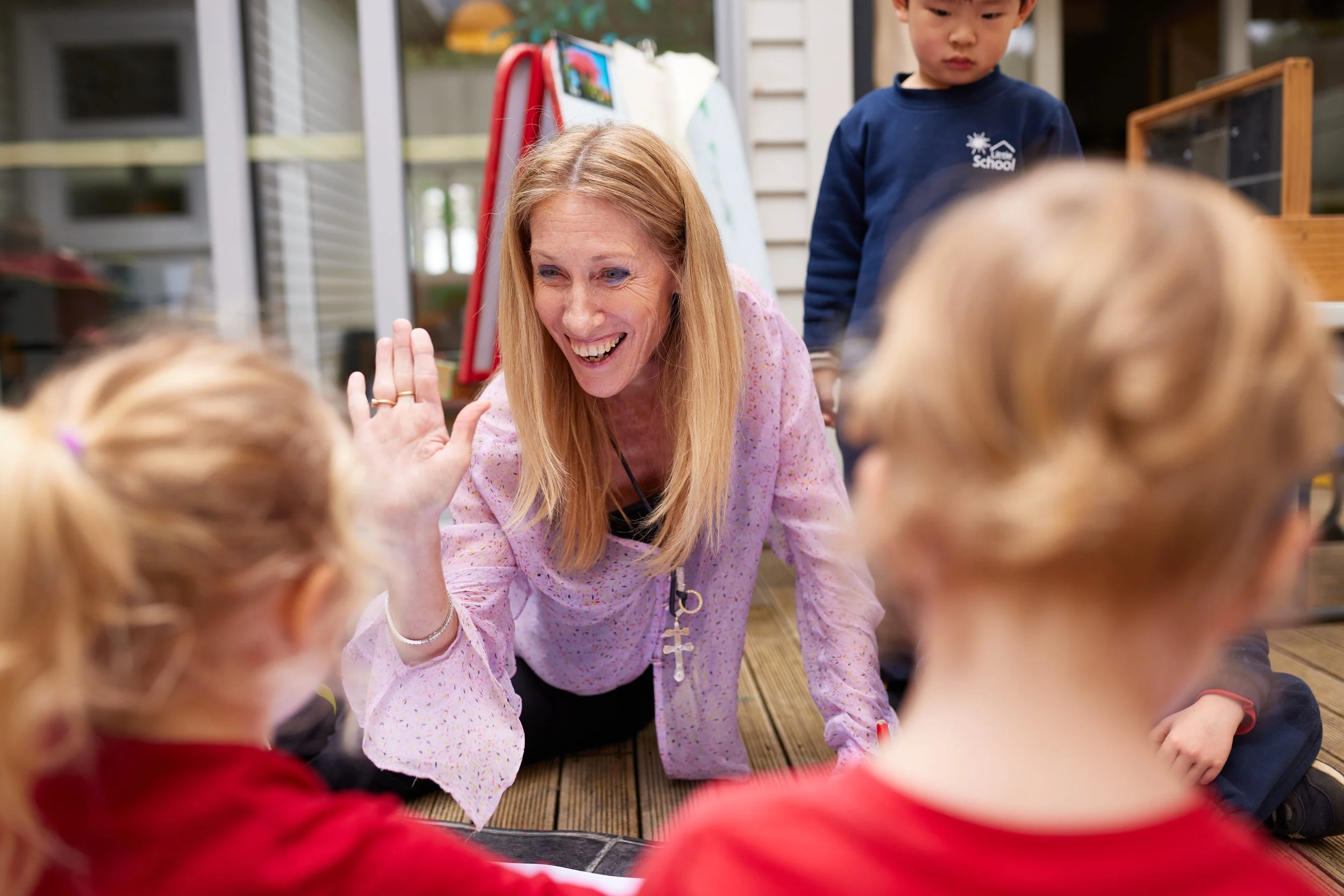
This year marks a very special milestone for me. Twenty-five years of Little School and more than 40 years working in education, both in primary schools and early childhood education. When I reflect on those years, the thousands of children I have worked with, the teachers I have supported, the families I have met and the extraordinary opportunities I have had to contribute to education both nationally and internationally, there is one thing that stands out above everything else. If we truly want children to succeed in learning, we must first understand how their brains and bodies develop and ensure that the foundations for learning are in place.
Throughout my career, I have been fortunate to experience education from many different perspectives. I have spent many years serving on the Board of the Early Childhood Council, including as President, advocating for quality early childhood education in New Zealand. I have also served as Chair of the Life Education Trust and spent many years on its Board, supporting the importance of children’s health, wellbeing and education.
Internationally, I have worked alongside Ministries of Education, contributing to the development of early childhood education frameworks, and have had the privilege of speaking at conferences around the world about the importance of education and, in particular, the extraordinary opportunities we have during the early years of a child’s life.
These experiences have given me a wonderful insight into different educational systems, philosophies, cultures and approaches to teaching. I have seen exceptional educational practice, passionate teachers and innovative programmes. I have also seen children struggling in classrooms, teachers overwhelmed by the increasing diversity of learning needs, and parents desperately searching for answers as to why their children are finding learning, behaviour or emotional regulation so difficult.
And after more than four decades, I keep coming back to the same question. Are we spending enough time understanding how children develop before we expect them to learn?
A Moving Child Is a Learning Child
When I established Little School 25 years ago, I wanted to create something that went beyond what was traditionally expected of an early childhood centre. I wanted an educational programme that recognised the enormous potential of young children, but also understood that learning does not begin with sitting at a table, holding a pencil, recognising letters or counting numbers. Learning begins much earlier, through the development of the brain, the nervous system, the senses and the body.
Drawing on my experience in primary education, early childhood education, special education and child development, I began developing the Little School Programme. I wanted to bring together the very best of what I had learnt about how children develop and how we could intentionally support that development through meaningful, engaging and enjoyable learning experiences.
I have always believed that children are capable of extraordinary things when we provide them with the right opportunities, the right environment and teachers who genuinely understand how learning develops. I also believe that education should never be about pushing children academically before they are developmentally ready. It should be about giving them the strongest possible foundations for learning so that when academic learning begins, they have the physical, sensory, cognitive, social and emotional skills to embrace it.
Over the years, the Little School Programme has continued to evolve, incorporating research, educational practice and the knowledge I have gained from working with children and educators around the world. It is incredibly rewarding to know that aspects of the programme I developed are now being used in other early childhood centres throughout New Zealand.
However, of all the elements within our programme, there is one that I believe deserves far greater attention from educators, parents and educational policymakers: our Sensory Motor Development Programme.
The Missing Piece in Education – Understanding the Developing Brain
One of the most important things I have learnt throughout my career is that children do not arrive at school with identical developmental foundations. Two children may be the same age, sitting in the same classroom, receiving the same instruction from the same teacher, yet their ability to concentrate, coordinate their movements, regulate their emotions, process information and learn may be quite different.
We often focus on what children can or cannot do academically. Can they recognise letters? Can they write their name? Can they count? Can they sit still and listen? Can they follow instructions? Yet how often do we stop and ask whether the underlying developmental skills needed to perform these tasks have been sufficiently established?
A child learning to write, for example, needs far more than an understanding of letters. They need postural stability, shoulder strength, hand-eye coordination, fine motor control, visual-motor integration and the ability to coordinate movements across their body. They need to be able to regulate their attention, organise their movements and process the sensory information they receive.
Similarly, a child learning to read needs more than phonics instruction alone. They need strong oral language, phonological awareness, attention, working memory and the ability to process visual information. Some children may also experience difficulties with visual coordination or other developmental skills that make reading more physically or cognitively demanding.
And a child who struggles to sit still may not simply be choosing not to listen. They may be experiencing difficulties with postural control, sensory regulation, attention or other aspects of development that deserve to be understood.
This is why I have spent so many years developing and refining our Sensory Motor Development Programme. I wanted educators to understand that movement is not simply something children do between learning experiences. Movement is itself an important part of learning and development.
Why Sensory Motor Development Matters So Much
During the early years of life, the brain undergoes extraordinary growth and development. Children learn about themselves and the world through their senses, their movements, their interactions and their experiences. Every time a baby reaches for an object, rolls over, crawls, balances, climbs, jumps or explores a new environment, they are developing skills and neural connections that contribute to their overall development.
Our sensory systems play an important role in this process.
The vestibular system helps us understand movement, balance and the position of our head in space.
The proprioceptive system provides information from our muscles and joints, helping us understand where our bodies are and how much force to use.
Our tactile system helps us interpret touch and physical sensations.
Together with our visual, auditory and other sensory systems, they contribute to how we move, interact, regulate ourselves and participate in learning.
In our Little School Programme, we deliberately provide opportunities for children to develop these skills. We incorporate:
balancing
climbing
crawling
crossing the midline
bilateral coordination
hand-eye and foot-eye coordination
body awareness
rhythm
movement sequences
activities that develop gross and fine motor control
These are not activities we include simply to keep children busy or entertained. They have a developmental purpose.
When children climb, they develop strength, balance, coordination and confidence.
When they crawl through tunnels or move through obstacle courses, they practise coordinating their bodies and navigating space.
When they throw, catch and kick balls, they develop timing, visual-motor coordination and motor planning.
When they engage in activities that involve crossing the midline, they practise coordinating movements across the body.
When they manipulate small objects, construct, thread, draw and explore materials, they develop the fine motor and perceptual skills that contribute to everyday independence and classroom participation.
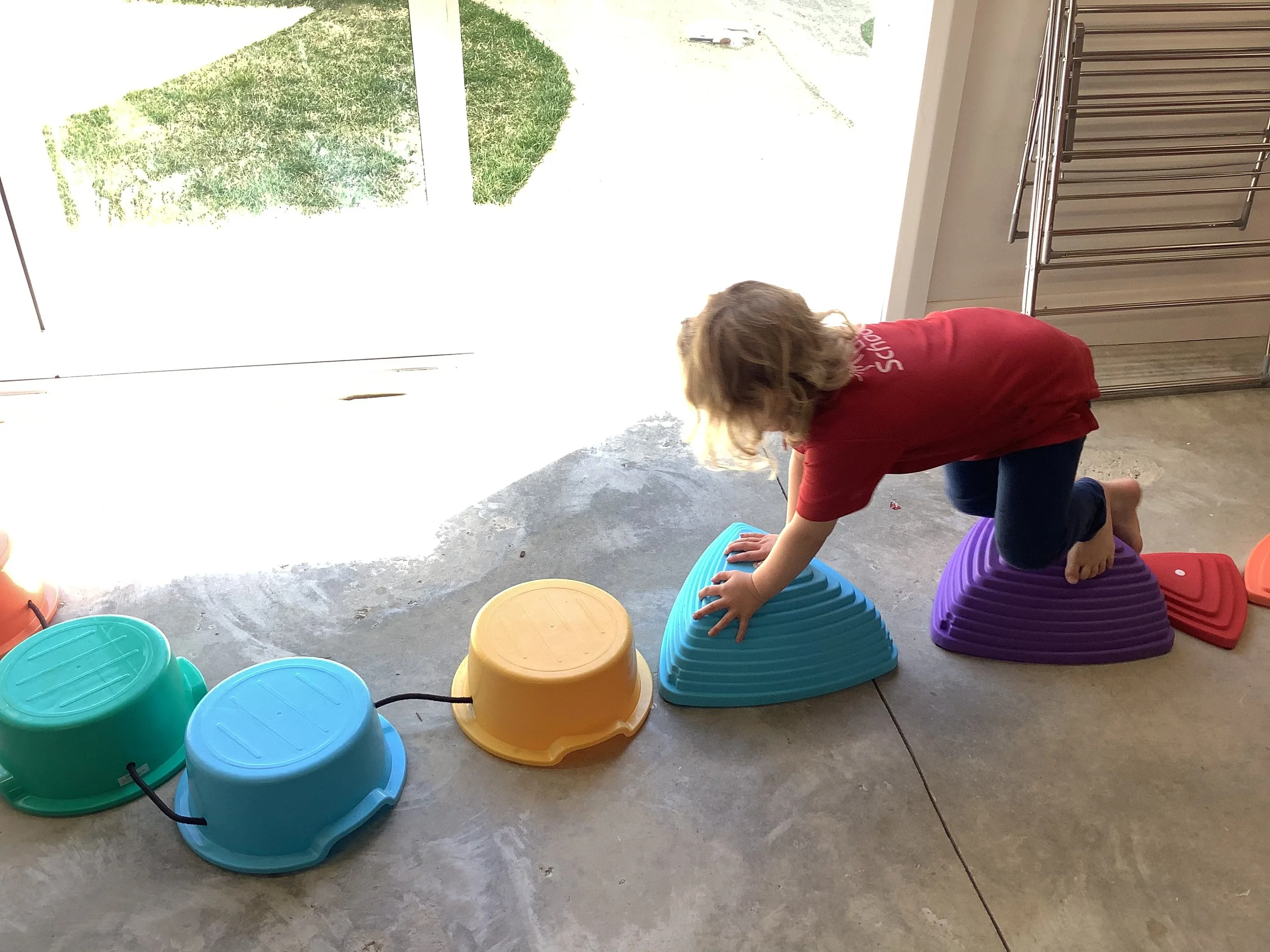
None of these activities guarantees academic success on its own, but together they provide valuable opportunities to develop the physical and sensory capabilities that support children’s participation in learning.
What concerns me is that many parents and educators still do not fully understand just how important these experiences are.
Primitive Reflexes – An Area I Believe Educators Need to Understand
Another area that has become particularly important in my work is understanding primitive reflexes and their relationship to early development.
Primitive reflexes are automatic movement responses present during infancy. They play important roles in early survival and development, and many are gradually integrated or replaced by more mature patterns of movement as the nervous system develops.
Through my training courses, I help educators understand reflexes such as the Moro reflex, the Asymmetrical Tonic Neck Reflex (ATNR), the Symmetrical Tonic Neck Reflex (STNR), the Tonic Labyrinthine Reflex (TLR) and the Palmar grasp reflex.
Understanding these reflexes can help educators appreciate the complexity of early motor development and recognise when a child may benefit from further developmental assessment. For example, difficulties with posture, coordination, hand function or movement patterns may prompt us to look more closely at a child’s overall motor development.
It is important, however, that we distinguish between established developmental science and areas where research is still emerging. The presence of a retained primitive reflex does not, by itself, explain ADHD, dyslexia or other learning difficulties, and reflex integration exercises have not been conclusively established as treatments for these conditions.
Nevertheless, understanding early movement development, observing children’s motor skills and recognising when specialist support may be appropriate are valuable parts of an educator’s professional knowledge.
My message has always been that we should look at the whole child rather than focusing only on the difficulty we see in front of us.
Have We Forgotten How Important Movement and Play Really Are?
One of the biggest changes I have witnessed over my 40 years in education is the way children’s everyday lives have changed.
Children today are growing up in a very different world from the one I experienced when I began teaching. Technology has transformed our homes, our classrooms and our lifestyles. Many children have fewer opportunities for unrestricted outdoor play, physical exploration and independent adventure. Some spend considerable time sitting, watching screens or participating in highly structured activities.
Of course, this is not the experience of every child or every family. But I do believe we need to consider what happens when opportunities for movement, physical challenge, social interaction and imaginative play become less frequent.
Children need to climb trees, balance on logs, run across uneven ground, jump in puddles, build huts, negotiate with friends, take manageable risks and work out how to solve problems for themselves. These experiences contribute to far more than physical fitness. They provide opportunities to develop confidence, perseverance, independence, social competence, emotional regulation and problem-solving.
I often wonder whether, in our desire to protect children, organise their lives and prepare them academically, we have unintentionally reduced some of the very experiences that help them become capable and confident learners.
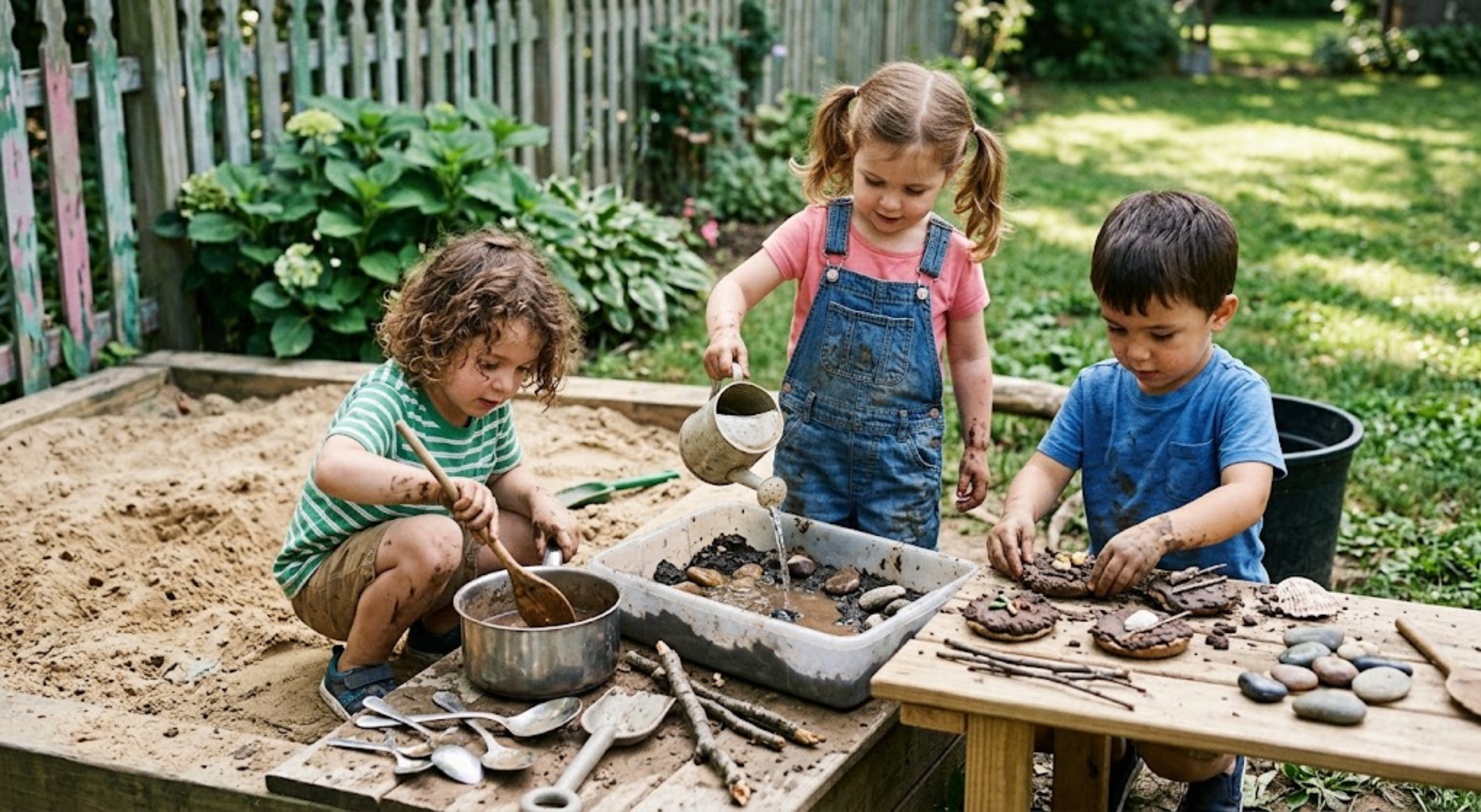
At Little School, we have always valued the importance of purposeful play, outdoor exploration, movement and hands-on learning. Our programme incorporates elements of Reggio Emilia, the environment as the third teacher, opportunities for different ways of learning, STEM exploration, loose parts and meaningful learning experiences that encourage curiosity, creativity and independent thinking.
I have never believed that play and academic learning should be seen as opposites. In fact, when we understand child development, we recognise that rich play experiences can support the language, thinking, motor, social and emotional skills that children need for later academic learning.
School Readiness Is About So Much More Than Knowing Letters and Numbers
Having worked in both primary and early childhood education, I have always been particularly interested in the transition between these two important stages.
I have seen children arrive at school with excellent knowledge of letters and numbers, yet struggle with independence, concentration, coordination, emotional regulation or the ability to manage themselves within a classroom environment.
I have also seen children who may not have had extensive formal academic instruction but who arrive at school confident, curious, physically capable, socially engaged and eager to learn.
This has reinforced my belief that school readiness must be understood much more broadly than academic achievement.
Of course, early literacy and numeracy are important. At Little School, we intentionally introduce children to phonological awareness, phonics, language, literacy, mathematical thinking and early number concepts through developmentally appropriate experiences. But these sit alongside our commitment to movement, sensory development, emotional wellbeing, social competence, independence and positive learning dispositions.
Children need opportunities to develop the confidence to try something new, the perseverance to continue when something is difficult, the ability to manage frustration and the curiosity to explore ideas.
They need to be able to ask questions, communicate their needs, work alongside others, solve problems and develop increasing independence.
These are not secondary skills. They are part of the foundations for learning, and fundamental to successful participation in education and life.
What I Wish Every Teacher and Parent Understood About the Foundations for Learning
If there is one thing I could change about education, it would be to ensure that every teacher, whether working with babies, preschool children or primary school students, had a strong understanding of the developmental foundations that contribute to learning.
I would love every educator to understand:
sensory integration
the vestibular and proprioceptive systems
primitive reflex development
gross and fine motor development
bilateral coordination
crossing the midline
visual-motor skills
the relationship between movement, attention and participation in learning
I would also love every parent to understand that supporting their child’s development does not require expensive equipment, complicated programmes or hours of formal instruction.
Sometimes the most valuable opportunities are the simplest. Playing outside, climbing, crawling, dancing, throwing balls, building with blocks, engaging in imaginative play, reading together, talking, singing and allowing children to explore their environment all contribute to development in meaningful ways.
When a child is struggling, I want us to become more curious about why. Rather than immediately assuming a child is lazy, naughty, unmotivated or simply not trying hard enough, we should ask whether there are developmental, sensory, emotional, environmental or learning factors contributing to their difficulties.
Some children will have neurodevelopmental conditions, disabilities or specific learning difficulties that require specialist assessment, appropriate adjustments and ongoing support. Understanding developmental foundations is not a replacement for diagnosis or evidence-based intervention. It is part of understanding the whole child and ensuring that we are not overlooking opportunities to help.
Every child deserves to be understood before they are labelled, and every child deserves support that recognises their individual strengths and needs.
Why I Created Life Learning
After decades of developing programmes, training teachers, working with children and contributing to educational leadership, I realised that the knowledge I had accumulated needed to reach far beyond the walls of Little School.
This was one of the driving forces behind creating Life Learning.
I wanted to make professional learning accessible to educators and parents, not only in New Zealand but around the world. I wanted teachers to have practical knowledge they could take directly into their classrooms, and parents to have a better understanding of why their children may be experiencing difficulties and what they could do to support them.
Through Life Learning, I have developed courses and resources covering:
other important aspects of child development and education
These courses are designed to help educators look beyond the immediate behaviour or learning difficulty and develop a deeper understanding of the child.
My vision has never been simply to provide another collection of online training courses. I want Life Learning to become a global learning community where educators and parents can continue to learn, reflect, ask questions, share experiences and develop their understanding of how to support children.
Because when teachers understand development, they can make more informed decisions about their teaching. When parents understand development, they can feel more confident about supporting their children. And when we bring those two groups together, we create far greater opportunities for children to thrive.
After 40 Years, I Am More Passionate About Education Than Ever
As I celebrate 25 years of Little School, I feel enormously proud of what we have achieved. I am proud of the educational programme we have developed, the teachers who have embraced it, the families who have trusted us and, most importantly, the thousands of children who have been part of our journey.
I am also grateful for the opportunities I have had to contribute to education through governance, leadership, international consultancy and working alongside educators and educational organisations throughout the world.
But perhaps the greatest lesson of my career is that the more we learn about children, the more we realise how important it is to keep asking questions.
Why is this child struggling? What is happening developmentally? What opportunities have they had? What skills have they developed? What support do they need? And what could we, as adults, do differently to help them succeed?
I believe we need to move away from an education system that sometimes focuses too heavily on what children should achieve by a particular age and towards one that has a deeper understanding of the developmental processes that support learning.
That does not mean lowering expectations. Quite the opposite. It means giving children the best possible opportunities to achieve their potential by understanding what they need to get there.
If I could leave one message with every parent, teacher, school leader and policymaker after 40 years in education, it would be this:
Before we focus solely on what we want children to learn, we must understand what they need in order to learn.
That belief was at the heart of Little School when I began developing our programme 25 years ago. It remains at the heart of everything we do today, and it is the driving force behind my work through Life Learning.
I am not finished learning, questioning, researching, developing or advocating for children. In many ways, I feel that the knowledge I have gained over the past four decades has given me an even greater responsibility to share what I have learnt with the next generation of educators and parents.
Because education is not simply about preparing children for the next classroom, the next assessment or the next stage of schooling.
It is about providing strong foundations for a lifetime of learning.
And after 40 years, I believe that is still one of the most important things we can do for any child.
Maria Johnson
Founder, Little School and Life Learning
Over 40 Years in Education
Little School – Celebrating 25 Years of Nurturing Children’s Potential.
Life Learning – Educate Here, Empower Everywhere.
Frequently Asked Questions
-
They are the physical, sensory, cognitive, social and emotional skills children need before and alongside academic learning, including movement, balance, coordination, attention, emotional regulation and independence.
-
It is how children’s senses and movement develop together in the early years. Climbing, crawling, balancing, throwing and exploring build the strength, coordination and body awareness that support participation in learning.
-
Primitive reflexes are automatic movement responses present in infancy. Many are gradually integrated as the nervous system develops. A retained reflex does not by itself explain ADHD, dyslexia or other learning difficulties, and where there are concerns, specialist assessment is appropriate.
-
No. Early literacy and numeracy matter, but so do independence, concentration, coordination, emotional regulation, social skills and the confidence to try new things.