

Why Children Are Arriving at School Unable to Sit Still or Listen
The Conversation We Can No Longer Ignore
Across New Zealand, there is a growing and consistent message coming from teachers:
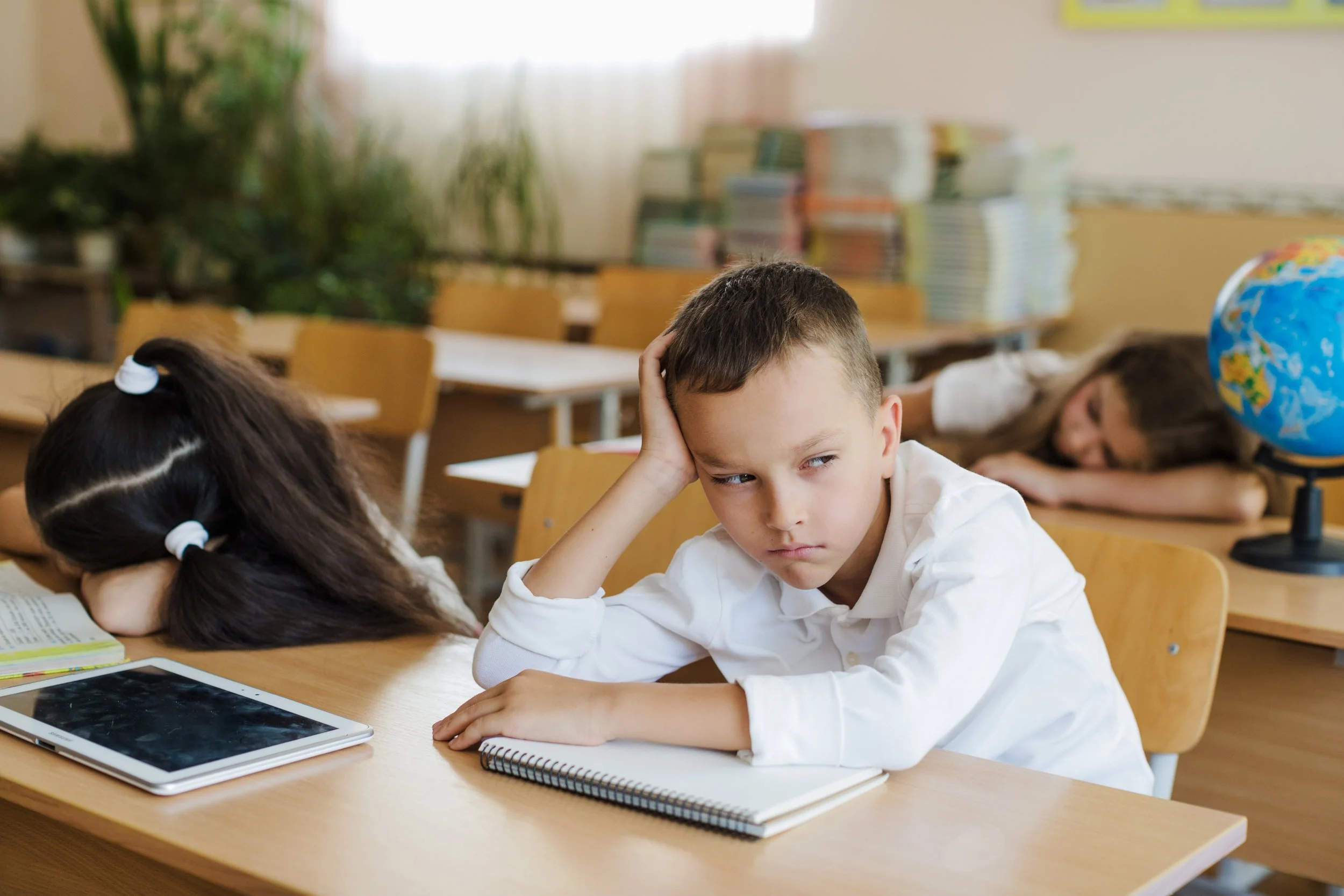
Children are arriving at school unable to sit still, listen, follow instructions, or regulate their emotions.
This is not isolated.
It is not occasional.
It is becoming increasingly common.
These are capable, curious children. So the question we need to ask is not “what is wrong with the child?”
It is: “What is missing in their development?”
What Teachers Are Actually Seeing
Teachers are reporting children who:
Struggle to sit comfortably for even short periods
Find it difficult to listen and follow simple instructions
Become easily overwhelmed or emotionally reactive
Avoid tasks that require focus or coordination
Have difficulty engaging in group learning
From the outside, this can look like behaviour. But underneath, it is something very different.
It’s Not Behaviour -It’s Development
Before a child can sit and learn, their body needs to be ready. Learning is not just a cognitive process,it is a whole-body process.
Children need:
A well-developed vestibular system (balance and movement)
Core strength to sit upright comfortably
Coordination to manage tasks
A regulated nervous system to feel calm and safe
Language skills to understand and respond
When these foundations are not in place, the classroom becomes hard work. Not because the child doesn’t want to learn, but because their body is not yet ready to support learning.
What Has Changed?
Childhood today looks very different.
Children are:
Moving less
Spending more time on screens
Engaging in less outdoor, exploratory play
Having fewer opportunities for rich, back-and-forth conversation
These experiences used to naturally build the brain. Now, many children are missing them.
Why This Matters So Much
When children arrive at school without these foundations:
Sitting still requires effort (sitting still is the highest form of balance)
Listening becomes difficult
Emotional regulation is harder
Learning feels overwhelming
Over time, this can impact:
Confidence
Engagement
Academic progress
And most importantly -how children feel about themselves as learners.
What Needs to Change
The solution is not to push academics earlier. It is to strengthen the early years. To prioritise:
Movement
Play
Connection
Language-rich environments
Intentional teaching
To understand that: The ability to learn begins long before formal learning starts.
What We Do Differently at Little School
At Little School, we focus on building these foundations every day.
We intentionally support:
Movement and Physical Development
Swinging, climbing, balancing, rolling - building strong, organised bodies.
Emotional Regulation
Calm, predictable environments and co-regulation with adults.
Language and Communication
Rich conversation, storytelling, and meaningful interaction.
Confidence and Independence
Opportunities to explore, try, and succeed.
We do not rush academics. It flows naturally from our curious young minds with a sensory rich intentional environment set up
Because when the foundation is strong, learning flows naturally.
Final Thought
Children are not arriving at school unprepared by chance.
They are arriving without the experiences that build readiness. If we want children to succeed, we must look earlier. We must invest in the foundations. Because the early years don’t get a second chance.
Learn more about Little School
To arrange a visit, contact 0800 LITTLE.
#ChildDevelopment #EarlyChildhoodEducation #BrainDevelopment #StrongBrainDevelopment #BrainFoundations #SensoryIntegration #PlayBasedLearning #MovementAndLearning #EmotionalRegulation #HelpingChildrenSucceed #WholeChildDevelopment #LifelongLearning #ParentingSupport #RaisingResilientChildren #LittleSchoolNZ #MariaJohnsonEducation